General anaesthesia in dentistry – why it is safe and comfortable
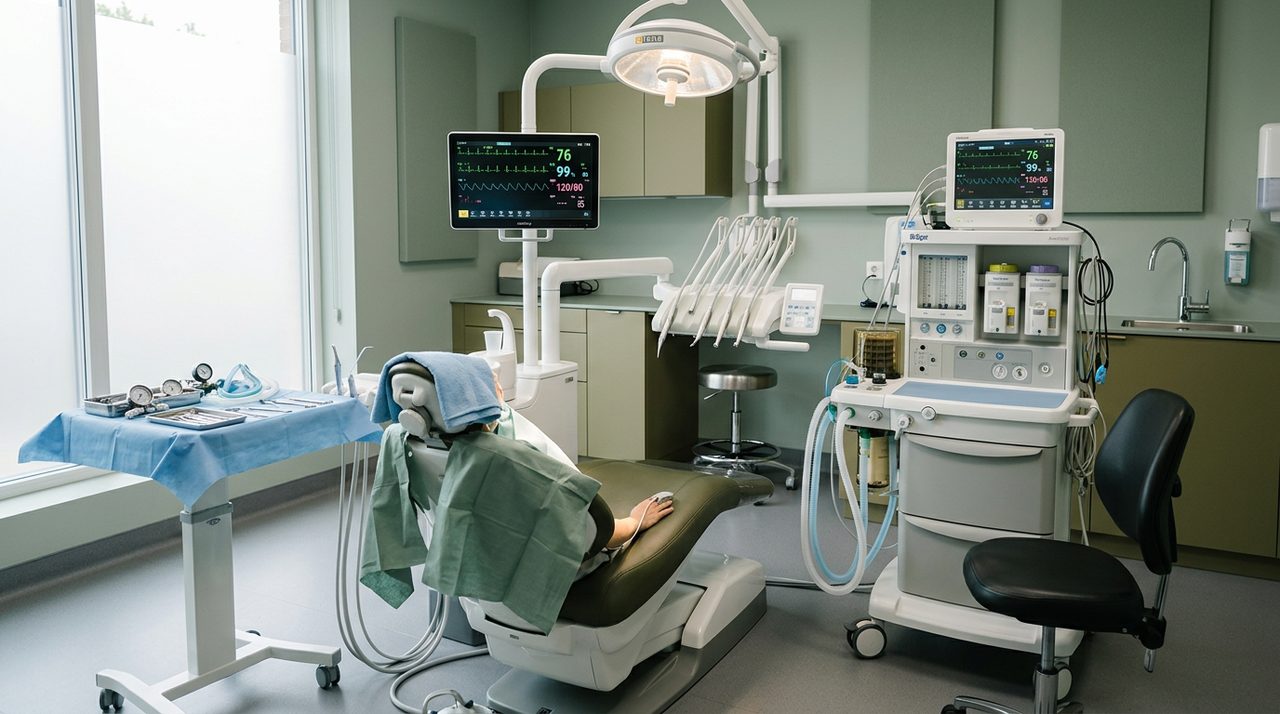
For many patients the biggest barrier to starting implant treatment is not the procedure itself, but the fear of it. General anaesthesia solves that problem at its source: the patient falls asleep and wakes up when everything is done. Below I explain why it is a safe procedure, when it is more comfortable than local anaesthesia, and why so few dental practices offer it.
Local anaesthesia is effective too – and usually enough
Let us be honest from the start: implant procedures performed under local anaesthesia are painless. Modern anaesthetics eliminate pain completely, and the vast majority of our patients are treated this way and are happy with that choice. General anaesthesia is therefore not a “better option for everyone” – it is an option that offers a real advantage in specific situations.
When general anaesthesia offers an advantage
There are situations in which general anaesthesia is simply the more sensible choice – both for the patient's comfort and for the quality of the procedure itself:
- Severe dental anxiety (dentophobia) – when the very thought of the dental chair causes panic and treatment has been postponed for years.
- Extensive, long procedures – full arch restoration, multiple extractions, zygomatic implants. Lying with your mouth open for two or three hours is simply exhausting.
- A strong gag reflex – in some patients it makes calm work in the posterior areas impossible.
- Difficulty holding a long, motionless position – for example because of back pain or neurological conditions.
- The wish to complete the whole treatment “in one go”, without splitting it into several appointments.
One thing that is rarely mentioned: general anaesthesia can also be beneficial from the surgeon's perspective. The patient is completely relaxed and still, there is no need to interrupt the work for additional doses of anaesthetic or for a break. This means a smoother, shorter procedure – and the duration of surgery has a direct impact on healing. The shorter the intervention, the less the bone and gums are stressed.
Why it is safe
General anaesthesia is a safe and well-controlled method – on one condition: proper preparation of the patient and the work of an experienced anaesthesia team. Safety does not come from the drug itself, but from the procedure surrounding it.
Before the procedure we carry out detailed diagnostics that allow us to assess the patient's health and rule out possible contraindications. On that basis the anaesthetist plans the anaesthesia individually – selecting the drugs and doses according to age, body weight, coexisting conditions and daily medication. This is not an off-the-shelf procedure, but a plan prepared for one specific person.
Throughout the procedure the patient remains under the constant care of an experienced anaesthetist and an anaesthetic nurse. Their only task is uninterrupted monitoring of vital functions – heart activity, blood pressure, blood oxygen saturation, breathing – and watching over the patient's safety and comfort. The surgical team takes care of the procedure; the anaesthesia team takes care of the patient only.
Why most practices do not offer it
The answer is mundane: it is a matter of facilities, not willingness. Performing treatment under general anaesthesia requires conditions that a typical dental practice simply does not have:
- An anaesthesia team – an anaesthetist and an anaesthetic nurse present throughout the entire procedure, dedicated solely to the patient.
- Anaesthesia equipment – an anaesthetic machine, a vital signs monitor, airway management equipment, an emergency kit and a backup oxygen supply.
- An operating room meeting surgical requirements and a place for safe recovery and observation after the procedure.
- Procedures and organisation – from anaesthetic qualification, through patient preparation, to supervision after waking up.
All of this means real costs and organisation that few practices decide to take on. As a result, a patient who needs general anaesthesia is often simply told that “we do not do that here” – and is left without a solution. That is why we treat this option as part of a complete offer, not as a curiosity.
What the day of the procedure looks like
For treatment under general anaesthesia the patient comes in fasting – precise guidance on the last meal and fluids is given individually during qualification. Before we start there is a conversation with the anaesthetist, intravenous access is placed and monitoring is connected. Falling asleep takes a matter of seconds.
From the patient's perspective the whole procedure comes down to one impression: they fell asleep and a moment later woke up with a finished, fixed set of teeth. The duration of the procedure, the sounds and any sensations related to it are simply not in their memory.
After the procedure the patient wakes up under the supervision of the team and stays under observation until their condition allows a safe return home. Because of the effect of the medication, driving is not allowed on that day – transport and the company of an adult must be arranged in advance.
And after waking up?
What follows is the same as with local anaesthesia. Mild, natural swelling or tenderness may appear after the procedure, and we control it fully with appropriately selected medication. Most of our patients return to their everyday activities within a few days. Thanks to the immediately fixed temporary bridge, normal functioning is possible almost straight away.
Summary
General anaesthesia is not necessary for every patient – but for some people it is the difference between treatment postponed for years and one calm day after which the problem no longer exists. If fear of the procedure has been your main obstacle so far, simply say so during the consultation. Together we will assess whether general anaesthesia is advisable and safe in your case.
Do you have a question about your own case?
Every situation is different. During a consultation with a CT scan we will assess precisely which solution will work best for you.
Book a consultation